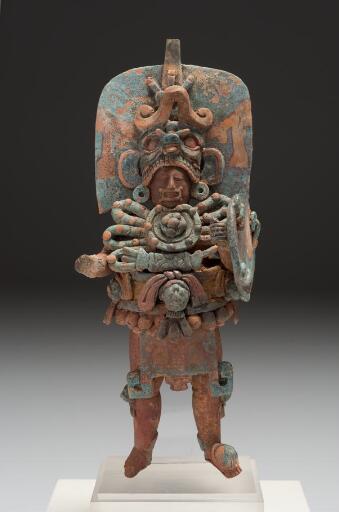
Standing Ruler, c. A.D. 600–800
Maya
The surviving works of Maya civilization range from the smallest objects to great edifices. Among the small-scale artworks of the Maya are many exquisite ceramic figurines only a few inches high. Despite their diminutive scale, these are also among the most fully realized of Maya sculptures in the round. This figurine vividly evokes a Maya lord costumed to impersonate a dynastic ancestor. The rectangular device over the mouth, along with the shield in one hand and the now-missing spear in the other, closely resemble the accoutrements of the nine ancestral figures in the sarcophagus chamber of Palenque’s Temple of the Inscriptions. The figure’s wide belt once supported a backrack of feathers, and his knee-length apron is marked with a symbol of the World Tree, the central axis of the Maya world. Elements of the complex costume below the headdress recur in other portrayals of Maya rulers; they define and reiterate his rank, and his position in the cosmos.
The role of these figurines in Maya belief and ritual is not clear, but their common appearance in Maya burials suggests a ritual function of some importance. Here the royal associations of the subject may indicate a rite performed by the king and commemorated through the making of this figurine.
Adult: Standing Ruler
Las obras que han perdurado de la civilización maya varían desde los objetos más pequeños hasta grandes edificios. Entre las obras a pequeña escala de los mayas encontramos muchas figurillas de cerámica de exquisita factura que tienen tan solo unos pocos centímetros de altura. A pesar de su diminuta escala, estas esculturas de bulto se encuentran entre las más elaboradas de la cultura maya. Esta figurilla evoca vívidamente a un noble maya vestido en imitación de un ancestro dinástico. El artefacto rectangular que lleva sobre la boca, junto con el escudo que sostiene en una mano y la lanza —hoy perdida— en la otra, se asemejan en gran medida a los accesorios de nueve figuras ancestrales halladas en un sarcófago del Templo de las Inscripciones de Palenque. El cinturón ancho de la figura llevaba antaño una hilera de plumas, y el delantal que cuelga hasta sus rodillas se encuentra marcado con un símbolo del Árbol del Mundo, eje central del mundo maya. Los elementos del complejo atuendo que vemos bajo el tocado se repiten en otros retratos de gobernantes mayas; su objeto es definir y reiterar el rango del sujeto, y su lugar en el cosmos.
No se sabe a ciencia cierta qué función cumplían estas figurillas en la creencia y el ritual mayas, pero su presencia en las tumbas mayas sugiere una función ritual de cierta importancia. Aquí las asociaciones del sujeto con la realeza podrían ser indicadores de un rito realizado por el rey y conmemorado con el esculpido de esta figurilla.
(Alphonse Jax, New York) by 1980;
purchased by Kimbell Art Foundation, Fort Worth, 1984.