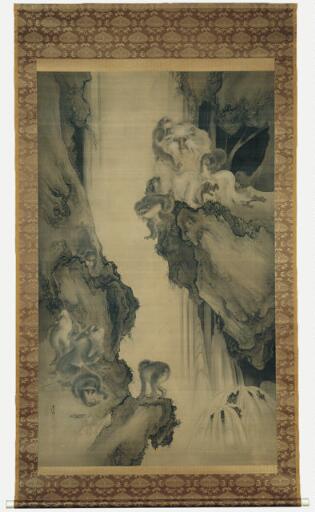
Waterfall and Monkeys, 1872
Shibata Zeshin, Japanese
Shibata Zeshin was the outstanding Japanese lacquer artist and painter of the nineteenth century. An energetic and prolific artist, he earned distinction during his lifetime for paintings that showed unusual creativity. Zeshin painted several works in which animals mimic human behavior. By demonstrating the apparent humanity of the animals, Zeshin creates a kinship between viewer and subject; and because monkeys naturally resemble man in their actions, they were a frequent choice of subject for works of this kind.
Painted during Zeshin’s artistic maturity, Waterfall and Monkeys is exceptional for its monumentality of scale and concept. While both waterfalls and monkeys are popular as singular subjects in Japanese painting, this imaginative and humorous combination is unique. Zeshin creates a lively scene of a troop of young monkeys with their beleaguered mother, crawling about the craggy rocks at the base of a fast-flowing waterfall. The naturalness and variety of the monkeys’ poses and expressions suggest that Zeshin observed simian behavior firsthand. His interest in realism is further apparent in the delicate rendering of the monkeys’ fur, from the soft washes and short, fine lines that define the youngsters’ coats, to the longer, fluid strokes of the mother’s thick hair. A large and ambitious painting, Waterfall and Monkeys demonstrates Zeshin’s sure sense of space and compositional balance.
Adult: Waterfall and Monkeys
Children's: Waterfalls and Monkeys
Children's: Waterfall and Monkeys, Answer to Monkey Puzzle
Shibata Zeshin fue el artista en laca y pintura más célebre del siglo XIX en Japón. Un artista energético y prolífico, se distinguió de sus pares durante su vida por sus pinturas que demostraron una creatividad insólita. Zeshin pintó una variedad de pinturas en donde animales imitan el comportamiento de la raza humana. Zeshin solía representar la humanidad aparente de los animales para subrayar el espíritu afín entre espectador y sujeto. Entre las pinturas de este tipo, grupos de monos eran un tema popular por el parecido natural entre sus acciones y las del hombre.
Zeshin pintó Cascada y monos en su pleno madurez artística y se destaca por la monumentalidad de escala y concepto. En la pintura japonesa, ambos monos y cascadas eran populares como temas individuales, pero esta combinación imaginativa y humorística es única. Zeshin construye una escena animada de una manada de monos con su madre atribulada, todos trepando por las rocas arrugadas en la base de una cascada de curso rápido. El naturalismo y la variedad de las poses y expresiones de los monos sugiere que Zeshin observó el comportamiento simiesco de primera mano. Su interés en el realismo se hace cada vez más evidente con la representación delicada del pelo de los monos, desde las aguadas suaves y líneas cortas y finas que definen el pelaje de los jóvenes hasta las pinceladas más largas y fluidas del pelo abundante de la madre. Por su tamaño y ambición, Cascada y monos demuestra el dominio de Zeshin del espacio y el equilibrio composicional.
(Fugendo Co., Ltd., Tokyo);
purchased by Kimbell Art Foundation, Fort Worth, 1984.